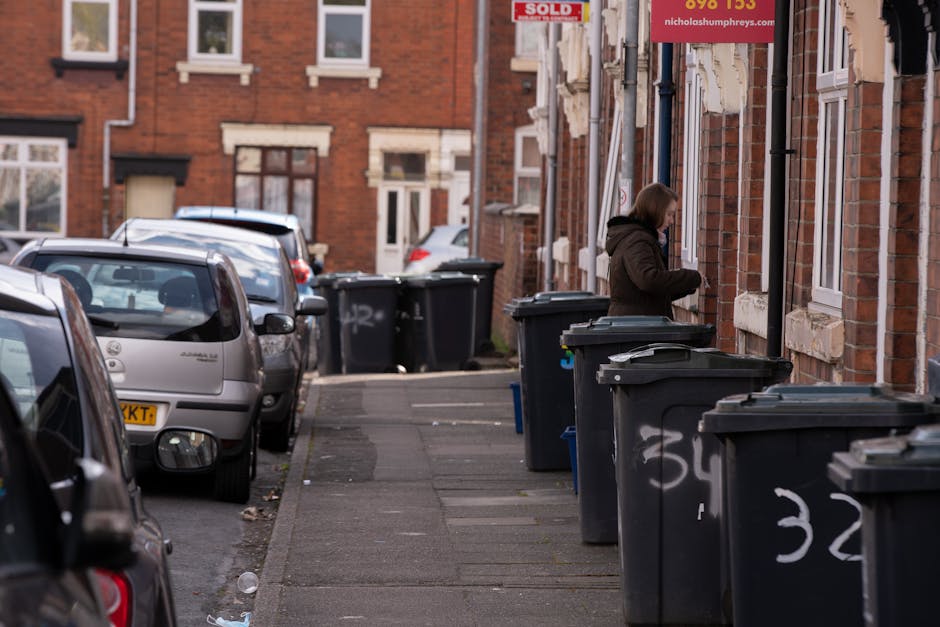
Insider Willesden rubbish removal tips for tight access homes
If you live in Willesden and your home feels like it was designed with a narrow hallway, awkward steps, and a door that barely swings open, rubbish removal can be more than a simple chore. It can become a small logistical puzzle. That is exactly why these Insider Willesden rubbish removal tips for tight access homes matter. Whether you are clearing a flat above a shop, a maisonette with a tight stairwell, or a terrace with a rear alley that only seems wide enough for a wheelbarrow, the right approach saves time, stress, and a lot of heavy lifting.
Truth be told, many clearance jobs in London are less about volume and more about access. Can a sofa turn the corner? Is there space to stage bags safely? Will neighbours, parked cars, or a steep flight of stairs slow everything down? Once you start thinking in those terms, the whole process gets easier. This guide walks you through what actually works on the ground in Willesden, what to avoid, and how to plan a removal so it runs smoothly rather than turning into a living-room game of furniture Tetris.
One quick note before we get into it: if you are comparing services for a flat, house, or one-off clearance, it can help to look at the wider options on the site, such as rubbish removal, flat clearance, and house clearance. Different properties need different handling, and in a tight-access home, that detail matters more than most people expect.
Table of Contents
- Why this matters in Willesden
- How tight-access rubbish removal works
- Key benefits and practical advantages
- Who this is for and when it makes sense
- Step-by-step guidance
- Expert tips for better results
- Common mistakes to avoid
- Tools, resources and recommendations
- Law, compliance, standards, or best practice
- Options and comparison table
- Case study
- Practical checklist
- Conclusion
- Frequently asked questions
Why Insider Willesden rubbish removal tips for tight access homes Matters
Willesden has plenty of homes where access is not straightforward. Some properties have shared entrances, some sit on busy residential streets with limited parking, and many flats involve stairs, narrow landings, or a small front path that leaves no room to spare. That creates a very real difference between a standard collection and a well-planned removal.
Why does this matter so much? Because access affects everything: how long the job takes, how many people are needed, what vehicle can get close enough, and whether items can be moved without damage. A bulky wardrobe that would be easy on a ground-floor drive can become a two-person manoeuvre in a top-floor flat with a tight bend on the stairs. You notice it instantly once the first item starts moving.
For homeowners, landlords, tenants, and local businesses in and around Willesden, the challenge is often not the rubbish itself. It is the route out. That includes front doors that open inward, basement steps, shared corridors, awkward garden gates, or a parking bay that is never quite available at the time you need it. Small things, really, but they add up.
Planning for tight access is also a way to reduce risk. Fewer bumps against walls, less strain on your back, fewer delays with neighbours looking out of windows wondering what is going on. And yes, a calmer job usually costs less in time and hassle. That part tends to be forgotten until the day of the clearance.
In practical terms, the smarter your preparation, the more likely your rubbish collection or clearance will feel tidy, controlled, and surprisingly quick. That is the point. Not perfect, just better.
How Insider Willesden rubbish removal tips for tight access homes Works
Tight-access rubbish removal starts with a simple assessment: what needs to go, how big it is, where it is located, and how it can safely get out. The best jobs usually begin before anyone arrives on site, because the heavy lifting is only one part of the work. The other part is route planning.
In a typical Willesden property, a crew may first check the access path from the room to the vehicle. They will think about staircase width, ceiling height, sharp turns, door clearance, lift availability, shared hallways, and whether items can be broken down first. It sounds obvious, but a surprising number of delays happen because someone assumed the sofa would fit through a gap that is, well, not really a gap at all.
For lighter loads, bagged rubbish may be carried out in stages. For larger items, teams often remove doors, drawers, or table legs where possible. In some cases, furniture can be dismantled on site to make movement safer. A lot of the job is simply reducing bulk in the smartest order.
Access also affects vehicle choice. A small van can sometimes be more useful than a larger one if the street is narrow or parking is limited. In other cases, the vehicle can stop nearby and the team will use trolleys, carrying straps, or manual handling techniques to bridge the last few metres. The last few metres are often the tricky bit, to be fair.
If your removal includes mixed waste, old furniture, and household clear-outs, it may be worth looking at related services such as waste clearance, furniture disposal, or sofa removal. The item type changes the handling approach, and in tight homes, handling is half the battle.
Key Benefits and Practical Advantages
The biggest benefit of planning rubbish removal for a tight-access home is simple: fewer surprises. That alone can make the day feel easier. But there are a few more advantages worth calling out.
- Less damage to walls and floors. Careful routing and the right tools reduce scrapes on narrow stairwells, chipped paint, and scuffed door frames.
- Faster collection. When access is mapped out in advance, the team spends less time figuring things out on the spot.
- Lower physical strain. Tight spaces make lifting awkward, and awkward lifting is where injuries happen. Good planning reduces that risk.
- Better coordination with neighbours. Shared entrances and blocks of flats need a bit of courtesy. A tidy plan helps keep disruption down.
- More accurate expectations. You have a better sense of what can be removed, what should be dismantled, and what may need a different approach.
There is also a quieter benefit: peace of mind. If you have ever tried to shuffle a heavy item through a narrow hall while someone keeps saying, "No, tilt it the other way," you already know why a plan helps. A good removal feels calm. Not glamorous. Just calm.
For people sorting out a bigger clear-out, the same thinking applies to home clearance and rubbish collection. These services work best when access is understood before the first bag moves.
Who This Is For and When It Makes Sense
This advice is especially useful if you live or work in:
- a basement flat with stairs and a narrow entry;
- a top-floor maisonette with a compact landing;
- an older terrace house with small doorways;
- a converted property split into multiple flats;
- a home with limited on-street parking near the entrance;
- a shared building where you need to keep noise and mess to a minimum.
It also makes sense if you are clearing out after a move, a refurbishment, a tenancy change, or simply a long-overdue tidy-up. In my experience, the people who benefit most are the ones who think, "It's only a few items," and then discover those few items are the awkward ones. A wardrobe. A broken chest of drawers. Two mattresses. You know the type.
Landlords and letting agents in Willesden also need this approach, particularly when turnaround is tight and access is shared. One damaged corridor or one unhappy neighbour can complicate an otherwise simple job. The same goes for small offices, shop backrooms, and mixed-use properties where waste has to move through non-standard routes.
If your property has a garden route, shed access, or a side passage, it may also be worth considering services like garden clearance or garage clearance. Sometimes the best exit route is not the front door at all.
Step-by-Step Guidance
Here is a practical way to handle rubbish removal in a tight-access Willesden home without making the day harder than it needs to be.
- Walk the route first. Start at the item and trace the path to the vehicle. Check door widths, hall corners, stairs, and any low ceilings or awkward fixtures.
- Sort items by size and difficulty. Put the bulky, heavy, and awkward pieces aside so they can be dealt with deliberately rather than last.
- Measure the problem items. Even rough measurements help. A sofa may look fine in the room and then refuse to pass a turn in the stairwell.
- Clear the walkway. Move shoes, plants, bins, bikes, and whatever else tends to live in the hall. A clear route makes a big difference.
- Protect the surfaces. If needed, lay down coverings on floors, especially where items will be pivoted or dragged carefully.
- Decide what should be dismantled. Some wardrobes, bed frames, desks, and tables are easier to remove in parts. Do this in advance where possible.
- Confirm parking and timing. In tight streets, a few extra minutes of planning can save a lot of circling.
- Keep fragile and valuable items separate. Don't leave them in the same path as waste bags or heavy furniture.
- Load in the right order. Move the heaviest or most awkward items first if they create a bottleneck. Sometimes the order makes the whole job smoother.
- Do a final sweep. Check for screws, packaging, dust, or forgotten bits in corners and under radiators. They always hide there, don't they?
A lot of people rush straight to loading. That works until it doesn't. The better approach is to make the route feel almost boring. Boring is good here.
Expert Tips for Better Results
The following tips come from the sort of details that matter most in cramped London properties. They are small, but they punch above their weight.
1. Treat the staircase like the main job, not an afterthought
In many tight-access homes, the staircase is the real obstacle. A gentle curve, a narrow landing, or a small turn at the top can stop a large item from moving cleanly. Measure the narrowest point, not just the widest-looking one.
2. Break down items before moving day if you can
Even partly dismantling furniture can save time. Remove drawers, legs, doors, and loose shelving. A wardrobe that looks immovable may become far easier once it is stripped back a little.
3. Keep a landing zone near the exit
If you can create a clear space near the front door or gate, items can be staged safely before being carried to the vehicle. That reduces the stop-start rhythm that often slows jobs down.
4. Think about neighbours and shared access
Shared stairwells and entrances deserve a bit of care. Keep noise down where possible, avoid blocking entrances, and try not to leave bags waiting in communal areas for longer than necessary. It's simple courtesy, but it goes a long way.
5. Don't underestimate weight distribution
One heavy item can be more awkward than five light bags. If something is dense, unbalanced, or likely to swing, plan extra help. The body knows the difference immediately.
6. Ask about lifting gear if the space is awkward
Moving straps, dollies, and protective covers can make a quiet but significant difference. In a tight hallway, the right tool can save both the item and the wall.
Expert summary: In tight-access Willesden homes, the most efficient rubbish removal jobs are not the ones with the strongest lifting. They are the ones with the best route, the least clutter, and the clearest plan.
Common Mistakes to Avoid
Most problems in tight-access rubbish removal come from underestimating the space. That is the short version. Here are the mistakes that tend to cause avoidable headaches.
- Not checking the route in advance. If you only look at the item and not the path out, you may hit a dead end halfway through.
- Leaving too much clutter in the hallway. A narrow hall is not the place for a pile of bags, shoes, prams, or folded boxes.
- Forgetting about stairs and landings. Items often fit in the room but fail at the corner.
- Assuming one person can manage everything. In tight access homes, a second pair of hands is often the difference between smooth and stressful.
- Ignoring parking logistics. Even a good lifting plan can be thrown off by a van that has to park far away.
- Skipping dismantling. Keeping furniture intact just because it looks simpler can create more work later.
- Mixing rubbish types without sorting. Reusable items, general waste, and bulky furniture are not always best handled the same way.
And one more, because it happens often enough to mention: do not leave the "we'll just squeeze it through" decision until the last minute. That phrase has caused more groans than it should. Sometimes it works. Often, it doesn't.
Tools, Resources and Recommendations
You do not need a workshop full of equipment to manage a tight-access clearance well, but a few practical tools make life easier.
| Tool or resource | What it helps with | Why it matters in tight access homes |
|---|---|---|
| Measuring tape | Checking doorways, stair widths, and furniture sizes | Prevents guesswork and awkward blockages |
| Protective floor coverings | Reducing scuffs and marks | Useful in narrow hallways and on stair edges |
| Moving straps | Improving grip and control | Helps when carrying heavy or bulky items |
| Hand truck or dolly | Moving items through flatter access points | Can save energy where there is enough clearance |
| Screwdriver or Allen key set | Dismantling furniture | Often the difference between possible and impossible |
| Strong bags or boxes | Containing smaller waste | Makes staging and lifting tidier |
On the service side, it helps to choose the type of clearance that matches the job rather than the other way round. For example, a single bulky item may suit waste collection, while a larger property clear-out may be better handled through rubbish clearance or waste removal. The labels overlap a bit in everyday speech, but the practical approach behind them can differ.
For businesses or rented workspaces with limited back access, business waste and office clearance may be more relevant. Again, the access route matters more than the category name when the corridor is tight and the lift is tiny.
Law, Compliance, Standards, or Best Practice
With rubbish removal, compliance matters because waste has to be handled responsibly. You do not need to become an expert in waste law to get this right, but you should understand a few common-sense principles.
First, items should be handled by a legitimate waste carrier or an appropriately managed service. If a provider seems vague about where waste goes, or cannot explain how it is dealt with, that is a red flag. In the UK, proper disposal is part of the basic expectation, not a nice extra.
Second, certain materials may need extra care. Electrical items, furniture with mixed materials, sharp waste, and construction debris are not all treated the same way. If your clear-out includes renovation debris, for example, a dedicated option like builders waste is often more appropriate than trying to bundle everything into one generic load.
Third, shared buildings and tight residential streets need considerate working. That means avoiding blocked exits, keeping noise within reason, and not leaving waste in communal areas. Best practice is partly about safety and partly about being a decent neighbour. Simple as that.
If you are unsure how something should be handled, ask before collection day. That is far better than guessing and then discovering the item needs separate treatment. Not ideal, to say the least.
Options, Methods, or Comparison Table
There is no single right way to remove rubbish from a tight-access Willesden home. The best method depends on space, item size, and how quickly the property needs to be cleared. Here is a straightforward comparison.
| Method | Best for | Pros | Limitations |
|---|---|---|---|
| DIY removal | Very small loads and easy access | Can be flexible and low-cost | Heavy lifting, parking issues, and more risk of damage |
| Pre-dismantled load-out | Bulky furniture in narrow homes | More manageable through tight routes | Needs time, tools, and care |
| Single-item collection | Sofas, mattresses, white goods, or one awkward piece | Quick and focused | Not ideal for mixed or larger clear-outs |
| Full clearance service | Multiple rooms, moving day, or inherited contents | Efficient for larger jobs and more complex access | Requires clearer planning and coordination |
In Willesden, full service tends to make the most sense when access is tight and the volume is moderate to high. DIY can still work for light waste, but once you are dealing with stairs, furniture, and limited parking, the balance often tips quickly. There is no prize for doing everything the hard way.
Case Study or Real-World Example
A typical example might be a two-bedroom flat in Willesden with a narrow entrance hall, a shared staircase, and a sofa that needs to be removed before a tenancy handover. Nothing dramatic. Just one of those jobs that looks straightforward until you stand in the hallway and try to turn the sofa.
In that sort of situation, the job usually goes better when the plan is made before anyone lifts anything. First, the route is cleared: shoes, a small table, and a couple of storage boxes moved out of the way. Then the sofa is checked for removable feet or cushions that can reduce bulk. If there is a tight landing, the team may angle the item upright and move slowly through the stairwell rather than forcing it flat.
If parking is limited outside, the vehicle is placed as close as possible without blocking neighbours. The item is loaded before smaller waste, because that keeps the route open and avoids double handling. The whole thing feels calmer, and frankly, calmer jobs are the ones everybody remembers for the right reasons.
That is the real lesson from many tight-access properties in Willesden: the clearance is rarely hard because of the rubbish itself. It is hard because of the route. Fix the route and the job gets much simpler.
Practical Checklist
Use this checklist before your rubbish removal day. It is the kind of thing that saves you from a last-minute scramble.
- Measure doors, hallways, stairs, and landings.
- Identify any item that may need dismantling.
- Clear the path from the room to the exit.
- Separate heavy, bulky, and fragile items.
- Check whether parking needs to be arranged in advance.
- Protect floors, walls, and corners if needed.
- Remove loose items from the route.
- Confirm what waste types are being taken.
- Decide whether a second person is needed for lifting.
- Leave communal areas tidy and usable.
- Do a final check for screws, tools, and small debris.
Quick takeaway: if you can answer the question "Can this item safely get out of the property?" before collection day, you are already ahead of the game.
Conclusion
Insider Willesden rubbish removal tips for tight access homes come down to one thing: respect the space. Measure carefully, clear the route, plan for awkward turns, and choose the right method for the item in front of you. That approach turns a stressful removal into a manageable one, even in a property with narrow stairs, shared corridors, or limited parking.
In practice, the best results usually come from small decisions made early. A little preparation now saves a lot of lifting later. And that is especially true in Willesden, where homes can be charming, compact, and not always designed with a sofa in mind. Still, with the right plan, even a tight-access clearance can go smoothly.
If you are ready to clear space without the usual hassle, start by comparing the most suitable service for your property and the items you need removed.
Get a free quote today and see how much you can save.
Frequently Asked Questions
What counts as a tight-access home for rubbish removal?
A tight-access home is any property where moving items out is awkward because of narrow hallways, stairs, small doorways, shared entrances, limited parking, or difficult turning points. In practice, that can mean a lot of London homes, especially flats and conversions.
Do I need to dismantle furniture before collection?
Not always, but it often helps. If a wardrobe, bed frame, or table is large enough to cause problems on the stairs or through a doorway, dismantling it first can make the whole process easier and safer.
Can rubbish be removed from a flat without a lift?
Yes, in many cases it can. The key is planning the route, checking the item sizes, and making sure the team has the time and support needed for stairs. It is slower than a lift job, but very manageable with the right setup.
What if my street has no parking close to the property?
That is common in parts of Willesden. A good plan accounts for the distance from the vehicle to the door and the time needed for carrying items safely. If parking is very restricted, mention it early so the collection can be arranged properly.
Is it better to book a full clearance or a single-item removal?
It depends on the amount and type of waste. A single awkward sofa or mattress may suit a focused removal, while a multi-room clear-out is usually better handled as a fuller clearance. The access route can tip the decision either way.
How do I protect walls and floors during removal?
Clear the route, use coverings where needed, and move items slowly through narrow points. Protective padding, blankets, or floor coverings can help when there are tight corners or delicate surfaces.
What items are hardest to remove from tight-access homes?
Large sofas, wardrobes, mattresses, wardrobes with fixed frames, and heavy desks are usually the most awkward. Anything bulky, heavy, or difficult to turn becomes more demanding in a narrow hallway or stairwell.
Are there any waste types that need special handling?
Yes. Mixed materials, electrical items, renovation debris, and sharp waste often need to be separated or handled in a different way. If you are unsure, it is best to ask before the collection rather than guess.
How far in advance should I prepare for rubbish removal?
The earlier the better, especially if access is tight. Even a short preparation window helps if you can measure the route, clear the hallway, and identify anything that needs dismantling. A little advance work goes a long way.
Can I combine furniture disposal with general rubbish removal?
Often yes, depending on the service and the waste types involved. Furniture, bagged rubbish, and some household items are commonly collected together if they can be handled safely and sorted properly.
What should I tell the removal team before they arrive?
Tell them about stairs, door widths, parking restrictions, shared access, bulky items, and anything fragile or awkward. The more honest and specific you are, the smoother the job tends to be.
What is the biggest mistake people make in tight-access clearances?
Assuming the item will fit and worrying about the details later. That is usually how a simple job becomes a stressful one. Measure first, plan the route, and avoid the "we'll figure it out on the day" approach if you can.